
The Behavioral Psychology Behind McDonald's "Experience of the Future" and how they Design Your Decisions Before You Order
You walk into a McDonald’s craving a simple, cheap burger. You leave having spent more than you planned, clutching a “Signature Crafted” sandwich and feeling surprisingly good about it. Was it a simple change of heart? Or was your journey from the door to the kiosk a carefully orchestrated sequence of psychological nudges?
As detailed in analyses of their “Experience of the Future” redesign, McDonald’s has masterfully weaponized its interior environment to become a silent, persuasive salesman. This isn’t about sinister mind control; it’s a clinical application of behavioral science to influence customer behavior at every touchpoint. From the first image you see to the final tap of the payment screen, every element is a data-driven choice designed to maximize your spending and minimize your discomfort. For any marketer or business owner, deconstructing this “architected appetite” provides a powerful blueprint for how to shape customer experience and guide decision-making through environmental design.
History/Deep Dive
The Science of the Sway
The tactics employed by McDonald’s are not novel inventions but rather the practical application of well-established psychological principles.
1. Anchoring and Decoy Effects:
The principle of Anchoring states that we rely heavily on the first piece of information we receive when making decisions. By placing images of their premium “Signature Collection” items at the entrance, McDonald’s sets a high price anchor. Suddenly, a Big Mac meal doesn’t seem so expensive in comparison, making it an easier “compromise” purchase. This is complemented by the Decoy Effect, where the presence of a high-priced option makes the mid-tier option (the one the company wants to push) appear more attractive.
2. Choice Architecture and Hick’s Law:
Choice Architecture, a term popularized by Thaler and Sunstein’s Nudge, refers to designing how choices are presented to influence outcomes. McDonald’s menu board is a prime example. By devoting 30% of the space to premium items and only 10-15% to classic fare, they architect a choice environment that naturally draws attention to higher-margin products. This also plays into Hick’s Law, which states that the time it takes to make a decision increases with the number and complexity of choices. By visually simplifying the board and highlighting specific items, they reduce decision fatigue and guide you toward a quicker, more profitable (for them) choice.
3. The Pain of Paying and Omission Tactics:
Spending money activates the same regions of the brain associated with physical pain. McDonald’s mitigates this “pain of paying” by conspicuously omitting prices from the large, appetizing photos. You’re encouraged to fall in love with the experience of the burger before being confronted with the cost, a classic strategy to reduce the sticker shock and separate the pleasure of acquisition from the pain of payment.
4. The Health Halo and Moral Licensing:
The Health Halo Effect is a cognitive bias where the presence of a healthy option (like a salad) makes the entire menu seem healthier. This alleviates the cognitive dissonance of wanting tasty, indulgent food while knowing it’s unhealthy. By showcasing a salad, McDonald’s gives your conscience an “out.” This then triggers Moral Licensing, where you feel you’ve earned the right to indulge because you considered the healthy choice. This explains the Cornell study finding that people who choose a “healthier” main course often add higher-calorie sides and drinks—a net loss for the diet, but a win for the average ticket size.
Hypothetical Case Study
“Brew & Blend” – The Boutique Coffee Shop
The Situation:
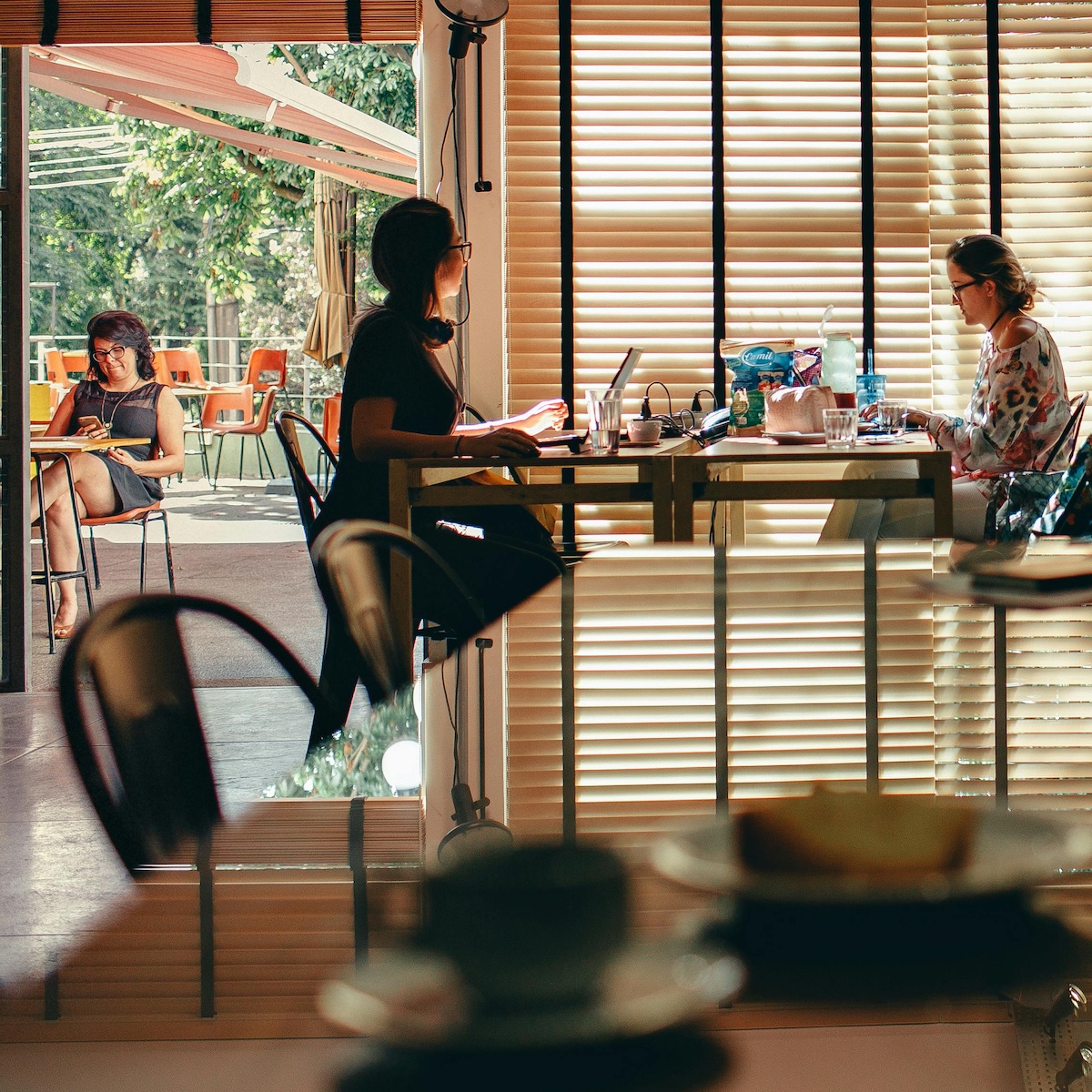
“Brew & Blend” is a stylish, independent coffee shop struggling with low average order values. Customers typically buy a simple black coffee and leave, despite the shop offering high-margin artisan pastries, signature toasts, and specialty lattes. Their environment is minimalist and clean, but it does nothing to guide customer behavior.
The MKUltraOne Strategy: Designing for Higher Value
We transform Brew & Blend from a transaction point into a behavioral funnel, using the same principles as McDonald’s, but with a boutique aesthetic.
-
Diagnose the Blind Spot: The shop’s blind spot is its passive environment. It assumes customers will seek out higher-value items. We need to architect the journey.
-
Implement the Psychological Blueprint:
-
Anchoring at the Entrance: The first thing a customer sees upon entering is a beautiful, backlit display of the most extravagant, visually stunning item: the “Mountain Berry & Brie Toast” and the “Saffron Honey Latte,” with no prices visible. This sets a high anchor for quality and price, making a $6 avocado toast seem reasonable.
-
Strategic Choice Architecture: We redesign the menu board using the “Golden Triangle” principle (where the eye naturally travels). The top-left, the primary anchor point, features the high-margin signature latte. The simple black coffee is listed in a smaller, simpler font at the bottom right. The board uses subtle, elegant graphics to draw the eye toward combo deals (e.g., “The Perfect Pair: Latte & Pastry”).
-
Triggering the Health Halo: We don’t hide our decadent options. Instead, we place a small, elegant basket of “Gluten-Free Almond Biscotti” right at the counter. This introduces a “perceived healthy” option, reducing the guilt a customer might feel about ordering a chocolate croissant and allowing for moral licensing. The unspoken message is, “We cater to all choices, including healthy ones.”
-
Reduce the Pain of Paying: We implement a contactless, frictionless payment system. More importantly, we train baristas to “upsell with a question” after the customer has committed to their order: “And would you like to try our fresh-baked almond croissant with that? It’s just out of the oven.” This separates the pasty decision from the core drink purchase, reducing the perceived incremental cost.
-
The result is an environment that feels just as boutique and authentic, but now actively and ethically guides customers toward a more satisfying (and profitable) experience, increasing the average ticket size by strategically shaping the choice landscape.
Conclusion
Keep it enjoyable
The McDonald’s model reveals a fundamental truth: there is no neutral design. Every color, every piece of copy, the placement of every product is a nudge in one direction or another. The question for businesses is not whether they will influence their customers’ decisions, but how and to what end.
Will you use these principles to create a confusing, manipulative environment that maximizes short-term extraction? Or will you use them to create a seamless, enjoyable experience that helps customers discover the best of what you offer, making their decision-making process easier and more satisfying? The most respected brands will be those that use this power of architectural psychology not to trick customers, but to guide them toward choices that create genuine mutual value—where the customer feels better off for having walked through the door.
Think Deeper. Your Brain Will Thank You.
