
The Ultimate Brand Victory: How to Hijack Language and Become a Verb
From Brand to Verb: The Thomas Crapper Playbook for Hijacking Language.
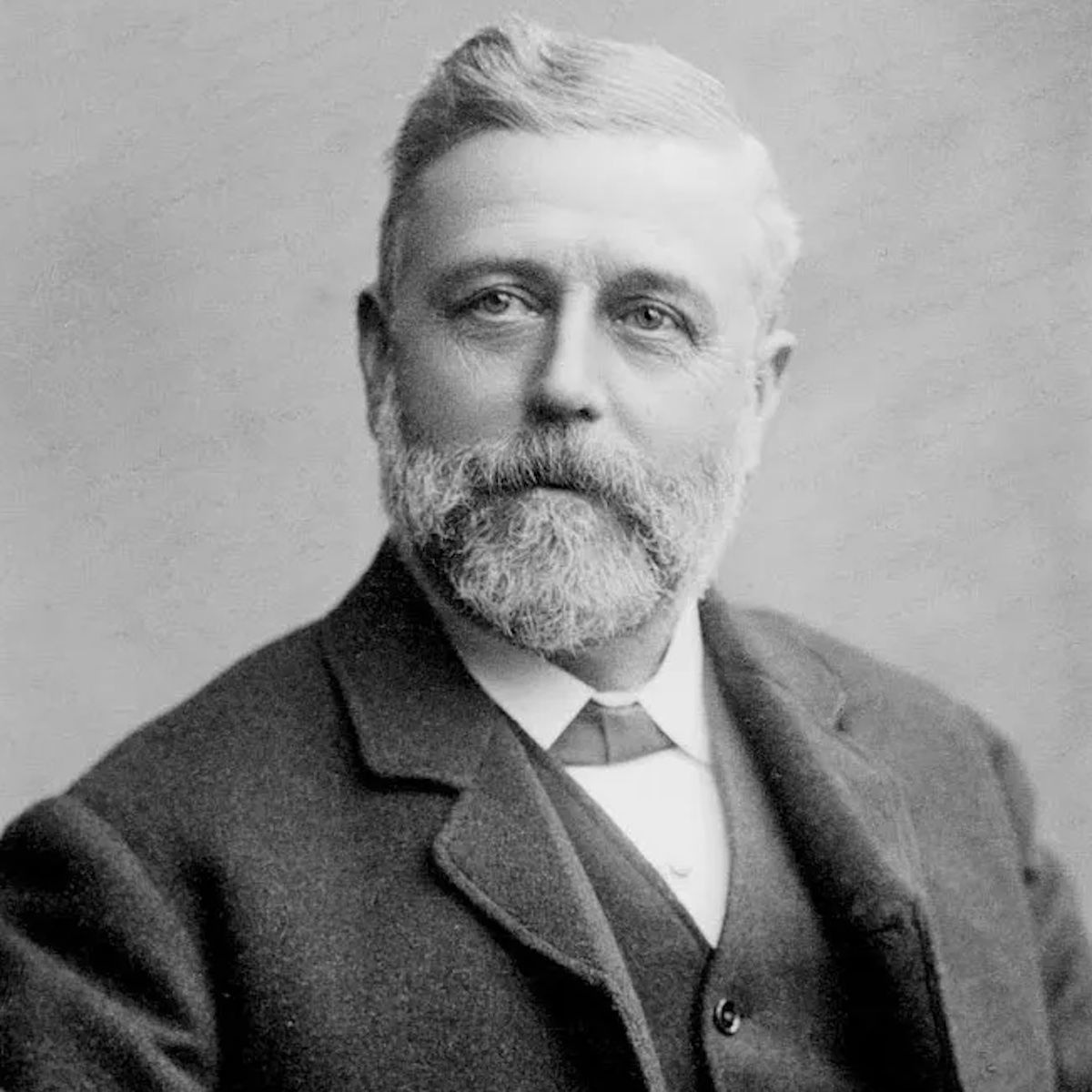
In the annals of business history, few have achieved a level of brand dominance so complete that it transcends commerce and embeds itself into our very lexicon. Meet Thomas Crapper, an English plumber from the Victorian era and, perhaps unknowingly, one of the greatest branding salesmen who ever lived.
While he did not, contrary to popular myth, invent the flush toilet, Crapper was a master craftsman and a pioneering businessman. His company, Thomas Crapper & Co., held several patents for improvements to the siphon flush system. He owned the first-ever bath, sink, and toilet showroom in London, making luxury plumbing fixtures a status symbol for the elite. His name was prominently stamped on the millions of toilets he manufactured and sold.
As these fixtures made their way across the British Empire and into military barracks, soldiers began to refer to the act of using the toilet as “going to the Crapper.” His brand, through sheer ubiquity and a fortuitously appropriate surname, became inextricably linked with the function itself. Today, no one remembers the specific brand of toilet they sit on, but the linguistic legacy of Thomas Crapper endures. This represents the pinnacle of marketing success: when your brand name ceases to be a noun and becomes a verb.
History/Deep Dive
This phenomenon, known as genericide (when a brand name becomes the generic term for a product or service), is a double-edged sword. It signifies market domination but can also jeopardize trademark protection. The psychological mechanisms behind it are powerful.
1. Cognitive Availability and the Prototype Effect:
When a brand is the first, the best, or the most ubiquitous in its category, it becomes the cognitive prototype. When people think of the action, your brand is the most mentally available example. For decades, people didn’t “search the internet,” they “Googled it.” Google became the prototype for online search. This isn’t just recall; it’s a cognitive shortcut where the brand defines the category.
2. Social Proof and Linguistic Conformity:
Language is a social tool. When a critical mass of people begins using a brand name to describe an action, it creates a powerful norm. Using the brand verb becomes the easiest way to ensure you’re understood. Saying “Just Uber there” is more efficient than “Use a ridesharing service to get there.” This social proof creates a feedback loop that further cements the brand’s verbal status.
3. The Principle of Linguistic Economy:
Humans naturally strive for efficiency in communication. We shorten, we abbreviate, and we use the most concise term possible. A brand verb is often the shortest, most effective way to convey a complex action. “Xerox this” is faster than “make a photocopy of this.” “FedEx it” is more direct than “send this via overnight courier.” The brand that wins is often the one that offers the most linguistically economical solution.
Hypothetical Case Study
“Streamline” – The Project Management App
The Situation:
“Streamline” is a new, intuitive project management app competing in a crowded field with giants like Asana and Trello. Their goal isn’t just to gain users, but to become the default way teams coordinate work. They want managers to say, “Just Streamline it,” when assigning a task.
The MKUltraOne Strategy: The Verbification Playbook
We design a marketing strategy not just to promote an app, but to promote a new verb.
-
Diagnose the Blind Spot: The competitors’ blind spot is that they market features (timelines, integrations). Streamline will market an action and an outcome.
-
Become the Prototype:
-
Simplicity as the USP: We position Streamline as the simplest, most intuitive option. The entire user interface is designed around a single, core action (e.g., “Flow it”). We want this action to be so central that it becomes the name for the process itself.
-
Ubiquity through Freemium: We deploy an aggressive freemium model targeting small teams and startups—the hubs of linguistic innovation. If these early adopters start using “Streamline” as a verb, it will spread into larger organizations.
-
-
Engineer Social Proof:
-
Influencer Campaigns: We partner with productivity influencers who don’t just review the app, but consistently use the verb in their content: “I ‘Streamlined’ my entire content calendar this week and saved 10 hours.”
-
In-App Language: The app itself uses the verb. Confirmation messages read: “Task ‘Streamlined’ to Sarah!” This trains users to adopt the terminology from day one.
-
-
Leverage Linguistic Economy:
-
Ad Copy: Our ads don’t say “A Better Project Management Tool.” They say: “Stop Managing. Start Streamlining.” The call-to-action is “Streamline Your Day.”
-
Content Marketing: We produce articles and templates titled “How to Streamline Your Client Onboarding” or “The 5-Step Streamline for Product Launches.” We are not just selling software; we are selling a methodology named after our brand.
-
The goal is to create a cultural meme where “Streamline” is no longer just an app, but the smart, modern way to get things done. The competition is still selling a product; Streamline is selling a new word for productivity.
The Ethical Line: Aspiring to Genericide Without Achieving It
This is the crucial paradox. While “becoming a verb” is the ultimate brand goal, legally achieving genericide means losing your trademark (as happened to Aspirin, Escalator, and Thermos). The challenge is to become the default without becoming generic.
The strategy is to always use the brand as a proper adjective, not a common verb, in your own formal communications. Google’s corporate messaging doesn’t say “Google it”; they say “Search on Google.” They encourage the public verb while meticulously protecting their trademark in legal and official contexts. The aim is to own the mindspace of the action while legally owning the name of the tool.
Conclusion
Give a Crap
Thomas Crapper’s legacy teaches us that the most powerful branding doesn’t just occupy shelf space; it occupies cognitive and linguistic space. It shifts from being what you buy to being what you do. In a noisy world, the brands that win are the ones that provide not just a solution, but a new vocabulary for living.
The question for your brand is not just what problem you solve, but what action you represent. And are you strategically positioning yourself to become the word for it? Because when your customers start using your name as a verb, you haven’t just gained a sale; you’ve gained a permanent place in the cultural conversation.
Think Deeper. Your Brain Will Thank You.
