
A false belief can be socially indistinguishable from a true belief when the evidence available to the individual is insufficient to discriminate between them.
There is a strange little problem hiding inside almost every argument about what is true: how do you know?
Not “How strongly do you believe it?” Not “How many people agree with you?” And definitely not “Did somebody make a really convincing meme about it?”
How do you actually know?
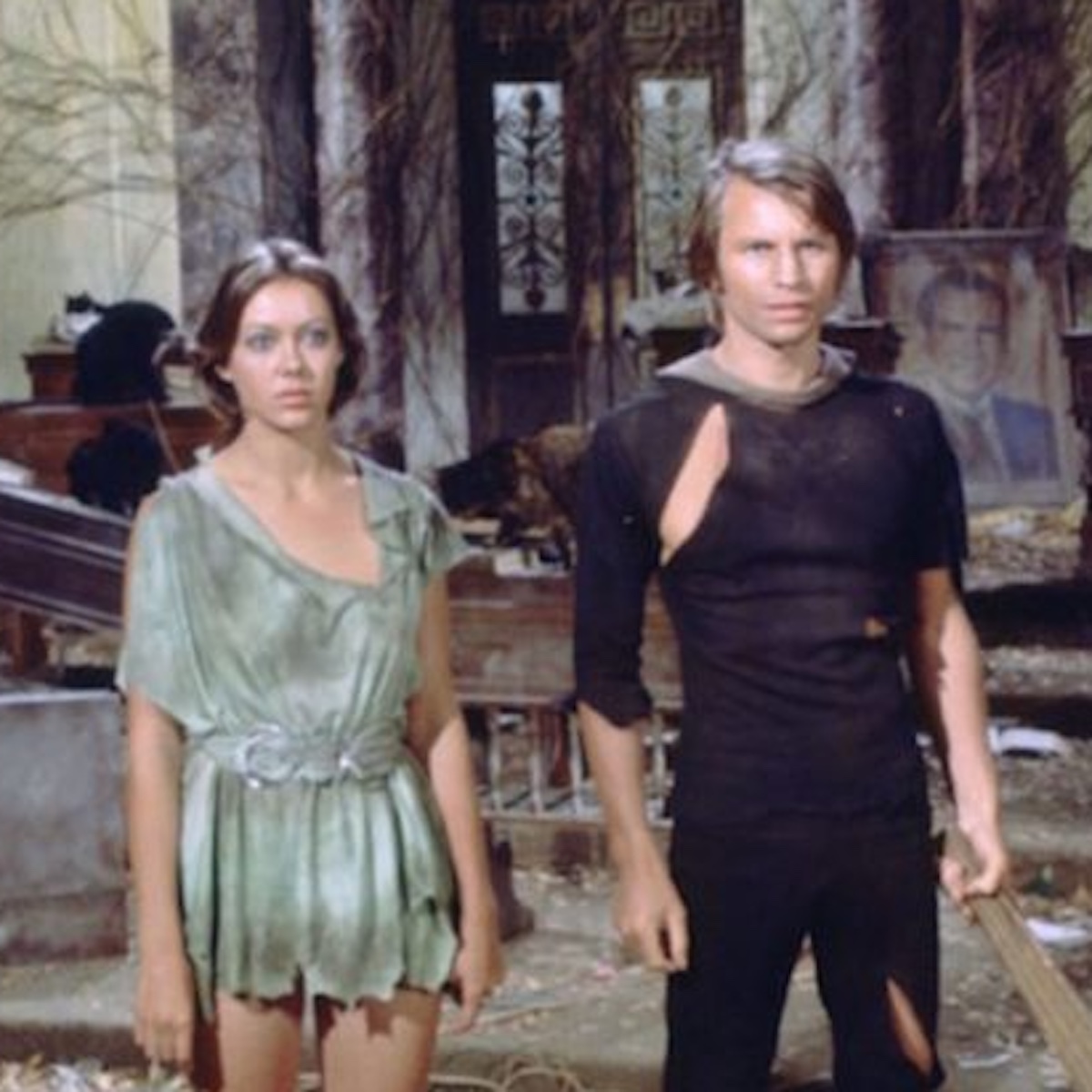
Consider Logan’s Run. In that wonderfully bizarre 1976 movie, society has solved many of humanity’s problems. People live comfortably, have almost no responsibilities, and apparently have a pretty good time. There is just one small catch: when you turn 30, you are sent to something called Carrousel, where everyone is told you will be renewed and go to a better place. The society accepts this as reality. It is part of the system. It is what everyone knows.
Except it isn’t true.
The people who question it are not merely disagreeing with an opinion. They are challenging the entire information system that defines reality for everyone else.
And that is where things get interesting for consumer psychology.
Imagine that you live in that world. You have never seen anyone come back from Carrousel. You have never been allowed to investigate what happens inside. The government tells you what happens. Your parents told you what happens. Your friends believe it. The television tells you what happens. Everyone you trust says the same thing.
Then some lunatic comes along and says, “They’re killing people.”
Who are you supposed to believe?
The uncomfortable answer is that, from your perspective, you may not have enough information to know.
That doesn’t mean the lunatic is right. It means that the available evidence isn’t sufficient to distinguish the truth from a convincing falsehood.
And marketers have been playing around in this neighborhood for a very long time.
You Don’t Have to Lie to Control Information
One of the most interesting things about persuasion is that you don’t necessarily need to manufacture false information.
You can simply decide which true information gets put on the table.
Suppose I am selling a product that has ten genuinely impressive features. I put all ten in the advertisement.
Suppose the product also has three significant disadvantages.
- I don’t mention those.
- Technically, I didn’t lie.
- Everything I told you was true.
I simply constructed the information environment in which you made your decision.
That distinction matters.
Consumers don’t generally walk around with an enormous database of every relevant fact about every product. We have limited time, limited attention and limited expertise. We outsource an enormous amount of our knowledge to other people.
- “Is this safe?”
- “Does this work?”
- “Is this good for me?”
- “Is this company trustworthy?”
- “Did this really happen?”
Most of the time, we don’t personally investigate these questions. We can’t. Nobody has time to become a chemist, economist, engineer, statistician, investigative journalist and professional product tester before buying a bottle of shampoo.
- So we use shortcuts.
- We trust the expert.
- We trust the brand.
- We trust the review.
- We trust the person who sounds confident.
- We trust the information that confirms what we already suspected.
And that last one gets particularly interesting.
When Evidence Becomes Ammunition
In 1979, Charles Lord, Lee Ross and Mark Lepper conducted a now-famous experiment involving people who supported or opposed capital punishment.
Participants were shown research that appeared to support their existing position and research that appeared to contradict it. You might expect this to bring people closer together. Give both sides the same evidence, let them examine it, and perhaps everybody walks away thinking, “Well, maybe the other side has a point.”
That is not what happened.
People tended to evaluate evidence that supported their existing beliefs more favorably, while scrutinizing contradictory evidence more critically. The result was increased polarization rather than agreement. The researchers called this biased assimilation and attitude polarization.
In other words, evidence didn’t necessarily function as a referee.
Sometimes it functioned as ammunition.
This creates a bizarre situation in which two people can look at the same collection of facts and walk away more convinced that they were right before they started.
And this isn’t simply a problem of stupid people failing to understand evidence.
Dan Kahan, Ellen Peters, Erica Dawson and Paul Slovic found something particularly uncomfortable in their research on what they called motivated numeracy.
Participants were given numerical information and asked to interpret it. When the same information was presented as a relatively neutral problem, people with stronger quantitative reasoning skills performed better. But when the problem was connected to a politically charged issue, people’s interpretations became polarized. More numerate participants were not magically immune to the problem. In some conditions, they became better at arriving at the answer that fit their existing outlook.
That is a rather unpleasant thought.
Being good at analyzing information doesn’t necessarily mean you’re going to use that ability to discover that you’re wrong.
You might use it to become better at defending yourself from information you don’t like.
I Have Seen This From Both Sides
I once did a marketing presentation for two completely different groups.
One group was convinced that climate change was essentially a social hoax.
The other group was convinced that climate change represented an existential threat that would destroy the planet.
The strange part wasn’t that they disagreed and that both groups had evidence.
Each side could point to studies, statistics, experts, graphs, news reports and other seemingly legitimate sources that supported its position.
I wasn’t necessarily looking at two groups with no information. I was looking at two groups swimming in information. And yet they had arrived at radically different realities.
That experience stuck with me because it demonstrates something that is easy to miss when we talk about misinformation.
The problem isn’t always that somebody invented a fake fact. Sometimes the problem is that both sides have real facts, but they are living inside different information environments.
One group sees evidence A, B and C. The other sees evidence X, Y and Z. Both can honestly say: “Look at the evidence!” And they’re both pointing to something real.
This is where consumer psychology gets deliciously weird. Yum Yum.
The Marketer Doesn’t Have to Own the Truth
Imagine two companies selling competing products.
Company A spends its entire campaign talking about durability.
Company B spends its entire campaign talking about price.
Both statements might be true.
But after seeing Company A’s advertising, you may believe durability is the most important characteristic of the product.
After seeing Company B’s advertising, someone else may believe price is the most important characteristic.
Neither marketer necessarily lied. They simply constructed different maps of reality. And once people have accepted the map, new information gets interpreted through it. This is why the information environment matters so much.
A consumer doesn’t just ask: “Is this statement true?”
They also implicitly ask:
- “Who told me?”
- “What else have I heard?”
- “What information was left out?”
- “Do people like me believe this?”
- “What would it mean about me if this were false?”
- “What information matters to me in order to make a decision?”
That last question can be a real psychological landmine.
If believing something is connected to your identity, your community or your status, changing your mind isn’t merely changing your mind. It can feel like changing who you are.
The Information Problem
This creates a paradox.
A false belief can be socially indistinguishable from a true belief when the evidence available to the individual is insufficient to discriminate between them.
Think about that sentence for a minute. It doesn’t say that truth doesn’t exist. It doesn’t say every conspiracy theory is secretly correct. It doesn’t say experts are lying. It says something much more uncomfortable:
From inside an insufficient information system, you may not be able to tell the difference.
That is why independent verification is so important.
- If the person selling you the product controls the evidence, controls the testing and controls who gets to examine the results, you have a problem.
- If the government controls the information, controls the investigation and controls access to the evidence, you have a problem.
- If a social-media community controls which information its members see and automatically labels contradictory information as propaganda, you have a problem.
And if a marketer tells you, “Trust us, we have the evidence, but you can’t see it,” you probably have a slightly different problem.
The solution isn’t necessarily to believe the skeptic. The solution is to make verification possible.
If the product really works, independent testing should help demonstrate that. If the fundraising numbers are legitimate, an audit should help demonstrate that. If a vote was conducted properly, independent verification should help demonstrate that.
If a scientific claim is correct, other researchers should be able to investigate it.
You don’t have to trust everyone.
You just need a system where you don’t have to trust one person.
And that may be one of the most important ideas in consumer psychology.
Because sometimes the most powerful thing a marketer can control isn’t the product.
It isn’t even the advertisement.
It is the information environment surrounding the consumer.
Control the information, and you may not have to convince people that your version of reality is true.
You only have to make competing versions difficult to verify.
And suddenly we’re back in Logan’s Run.
The scary part was never simply that everyone believed a lie.
The scary part was that the system had made the truth extremely difficult to independently discover.
Maybe the biggest question a consumer can ask isn’t:
“Is this true?”
Maybe it’s:
“How would I know if it wasn’t?”
The marketer doesn’t necessarily have to manufacture false evidence. They may only need to control which evidence is visible, how it is framed, who delivers it, and what information the audience has available for comparison. –Og LewisOne
And here’s the part where we should probably admit something uncomfortable.
We’re really good at this.
You can walk into a grocery store without toothpaste on your shopping list and somehow walk out carrying a tube of Minty Fresh Spearmint Bubble Gum Blue Cherry Tooth Whitening Super Scrubbing Bubbles™ Extreme Maximum Power.
You didn’t need it. You didn’t research it. You may not even remember picking it up. You might not have been able to afford it. It wasn’t even on sale.
But somebody spent a considerable amount of time figuring out exactly what words, colors, promises, packaging, shelf placement and tiny psychological nudges would make your brain go, “Yeah. That one. Obviously.”
And that’s just toothpaste.
Now imagine doing the same thing with something people actually care about.
- Your politics.
- Your health.
- Your neighborhood.
- Your money.
- Your tribe.
That’s where consumer psychology gets really interesting.
Because marketers don’t necessarily have to convince you that something is true. We can construct the little universe in which that conclusion feels obvious.
We study the scenario that got you where you are. We study what you already believe. We study what scares you. We study what makes you feel clever. We study what makes you feel like you’re part of the good guys.
Then we put the right information in front of you at the right moment and let you finish the argument.
That’s the trick. The most effective persuasion doesn’t always feel like someone persuaded you. It feels like you figured it out yourself.
So the next time you find yourself absolutely certain that you’ve reached a conclusion entirely on your own, take a second.
Not to make you paranoid, but Ask yourself:
“Did I actually investigate this, or did somebody build the road that led me here?”
Because somewhere, possibly in a conference room full of people arguing about toothpaste flavors, there may be a marketer who has already studied the entire scenario that got you to this exact moment.
And they’re probably very pleased with themselves.
Now go brush your teeth.
The tube has already won.
