
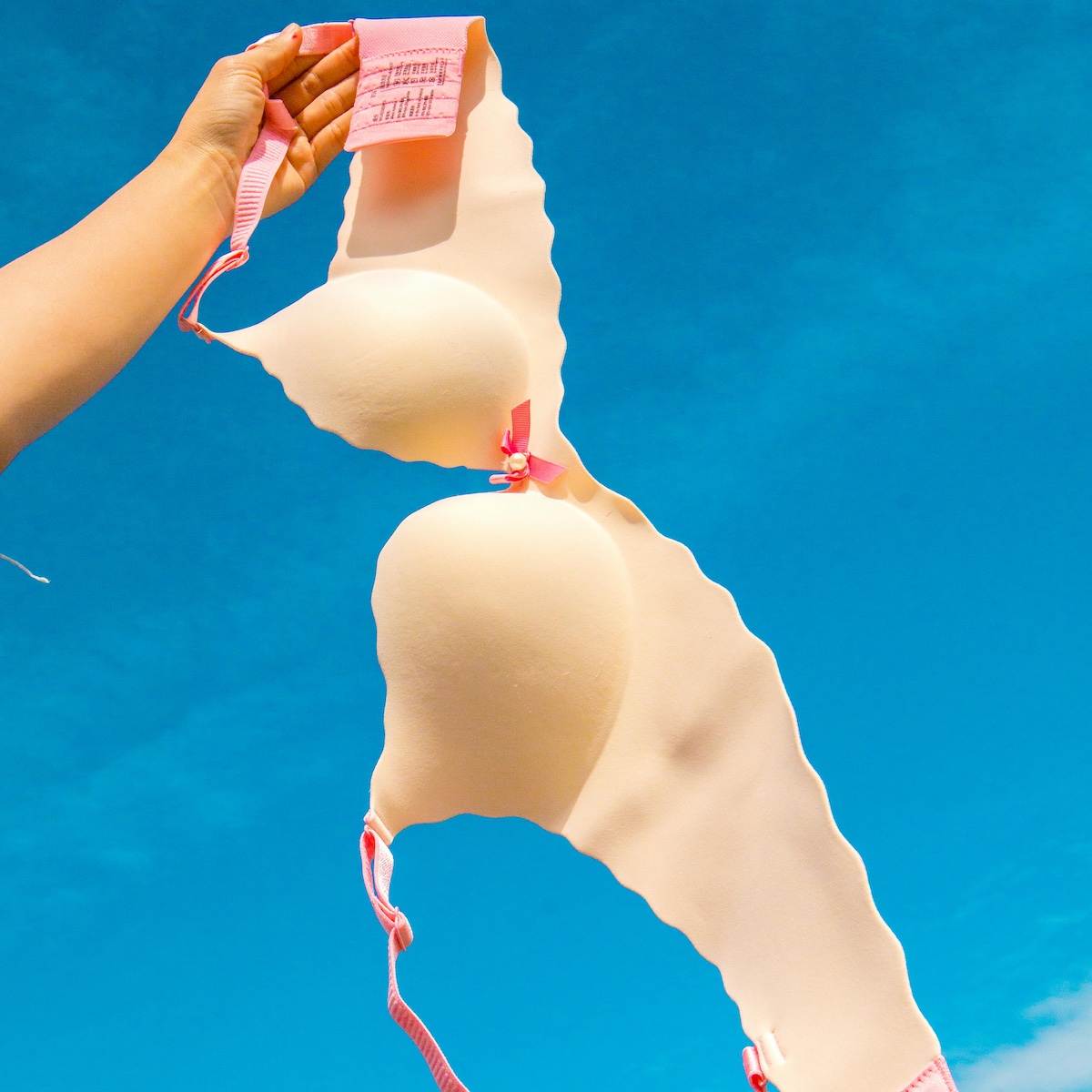
This is The Marketing Masterclass That Made the Bra a Necessity.
There was a time in the not-so-distant past when the bra, a now-ubiquitous foundation of the modern wardrobe, simply did not exist. Women’s undergarments were dominated by the corset—a restrictive, often uncomfortable symbol of a different era. The transition from “letting it all hang out” to the structured support of the bra wasn’t a natural, inevitable evolution of fashion. It was a meticulously engineered shift, a masterclass in inventing a need.
This journey from novelty to necessity reveals a powerful blueprint for how to use cultural currents, strategic marketing, and deep psychological triggers to fundamentally alter consumer behavior and create an entire market from scratch.
History/Deep Dive
The Psychological Blueprint of a Cultural Shift
The bra’s ascent was not accidental. It was propelled by a perfect storm of historical circumstance and applied consumer psychology.
1. The “Better Mousetrap” and the Vacuum (1910s):
The bra was initially invented as a solution to a minor, specific problem. Mary Phelps Jacob created her “backless brassiere” in 1914 for comfort under a particular evening gown. It was a “better mousetrap” than the corset. But the true catalyst was World War I. The U.S. government’s plea to women to stop buying corsets to conserve metal for the war effort created a cultural and commercial vacuum. An entire industry was suddenly obsolete, and a new one was perfectly positioned to take its place.
2. The Reframing: From Comfort to Conformity (1930s-1950s):
This was the critical marketing pivot. Companies like Warner’s and Maidenform moved the conversation beyond mere comfort. They launched a multi-pronged psychological offensive:
-
The Medical Frame: Brands introduced cup sizes (A, B, C, D) and marketed bras as essential for “health,” “posture,” and “proper development.” This gave a simple garment an air of scientific necessity, pathologizing the natural female form.
-
The Social Conformity Frame: Advertising relentlessly tied the bra to ideals of femininity, propriety, and social status. A “well-put-together” woman wore a bra. To go without was framed as unkempt, unprofessional, and even immoral. This leveraged normative social influence—the powerful desire to fit in and be accepted by the group.
-
The Identity Frame: Maidenform’s legendary “I dreamed I…” campaign (e.g., “I dreamed I was a star in my Maidenform bra”) was a stroke of genius. It didn’t sell support; it sold an identity. It linked the product to fantasies of power, glamour, and confidence, making it an indispensable prop in a woman’s personal narrative.
3. Creating a Rite of Passage:
Marketing deliberately targeted mothers and teenage girls, framing the purchase of a first bra as a sacred rite of passage into womanhood. This transformed the product from a garment into a symbol of identity, ensuring customer loyalty from a young age and embedding the product deep within the cultural lifecycle.
Hypothetical Case Study
“VitaRoutine” – The “Essential” Daily Supplement
The Situation:
“VitaRoutine” has developed a daily supplement containing a blend of vitamins and adaptogens. The benefits are real but subtle—slightly better energy, slightly improved focus. In a crowded market, they are struggling. They need to transcend the “nice-to-have” category and become a “must-have.”
The MKUltraOne Strategy: The “Modern Bra” Playbook
We advise VitaRoutine to stop selling a supplement and start selling a new standard of self-care.
-
Create the Cultural Vacuum: We launch a content campaign focused on the “hidden epidemic of cognitive drain.” We publish articles and partner with wellness influencers to discuss how modern life—constant notifications, information overload—is creating a collective cognitive deficit. We are not selling a product yet; we are selling the problem.
-
Reframe the Product’s Role:
-
The Medical Frame: We don’t just list ingredients. We use scientific-sounding language: “Our patented Neuro-Support Matrix is clinically formulated to combat mental fatigue and optimize neural pathways.” We reframe it from a supplement to a daily “cognitive maintenance” protocol.
-
The Social Conformity Frame: Our advertising showcases high-performers—entrepreneurs, artists, executives—who “wouldn’t start their day without VitaRoutine.” The tagline: “The First Step in a High-Performer’s Routine.” The message is that taking VitaRoutine is what serious, successful people do. It becomes a badge of commitment to one’s own potential.
-
The Identity Frame: We launch a campaign titled “Your Sharpest Self.” We sell the identity of being a clear-headed, resilient, and capable individual. The supplement is merely the key to unlocking this pre-existing, superior self.
-
-
Establish a Ritual: We design the packaging and marketing to encourage a daily ritual. The bottle is sleek and sits on the kitchen counter or desk as a visible symbol of this commitment. We use language like “Your morning clarity ritual” and “Commit to your sharpest self.”
The result? VitaRoutine is no longer a optional supplement. It becomes an essential, non-negotiable tool for anyone who takes their performance and mental well-being seriously—a modern bra for the mind.
The Strategic Imperative: Are You Selling a Product or a Proposition?
The bra’s history teaches us that the most powerful marketing doesn’t just satisfy a desire—it creates one. It connects a product to a deep-seated human need for belonging, identity, and self-worth.
-
Identify the Vacuum: What shifting cultural trend or emerging anxiety can your product address?
-
Reframe the Narrative: Can you move your product from a “tool” to a “necessity” by linking it to health, social acceptance, or identity?
-
Sell the Transformation, Not the Item: People don’t buy drills; they buy holes. They didn’t buy bras; they bought confidence, propriety, and a place in modern society.
Conclusion
Find an Identity
The bra is more than an undergarment; it is a monument to the power of marketing to shape culture and dictate norms. Its journey from a clever invention to a societal expectation is a stark reminder that what we consider “essential” is often the result of a carefully crafted story, told repeatedly until it becomes truth.
For your brand, the challenge is to ask: What need are you inventing? What deeper identity are you selling? Because the brands that define eras aren’t the ones that follow trends; they are the ones that, through insight and audacity, have the power to tell society what it needs to be.
Think Deeper. Your Brain Will Thank You.
